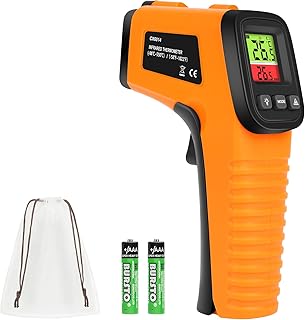
The Ultimate Guide to Laser Thermometers for Every Need in 2026
As we progress further into 2026, the demand for precise temperature measurement tools continues to grow across various industries. Laser thermometers, also known as infrared thermometers, have become essential instruments that cater to a multitude of needs. Whether for industrial applications, medical use or everyday household tasks, understanding the capabilities and features of laser thermometers is paramount.
Understanding Laser Thermometers
Laser thermometers operate by detecting the infrared radiation emitted by objects, allowing users to gauge their surface temperature without direct contact. This non-invasive method is particularly useful in scenarios where traditional thermometers may pose risks or inaccuracies. The versatility of laser thermometers makes them indispensable in sectors such as manufacturing, healthcare, and even food safety.
Types of Laser Thermometers
In 2026, various types of laser thermometers are available, each tailored for specific applications. Industrial-grade models are designed to withstand harsh environments and provide accurate readings over extensive ranges. These are perfect for monitoring machinery and ensuring optimal operation. On the other hand, handheld models are more suited for everyday use, offering convenience and portability.
People Also Look For:
- DOQAUS Digital Meat Thermometer, Instant Read Food Thermometer with Backlight LCD Screen, Foldable Long Probe & Auto On/Off, Perfe...
- MVCUASF Digital Food Thermometer Instant Read with Large LCD Screen Auto Off Long Probe Thermometer ℉/â„...
- HomeLyfe Meat Thermometer Digital - 0.5s Instant Read Food Thermometer, ±0.3℃ Precision, Large Auto-Rotatin...
- BTMETER Pyrometer 30:1 Industrial Laser Thermometer Gun, -58℉ to 2732℉ Non Contact High Temp Infrared Thermometer Di...
- DOQAUS Digital Meat Thermometer, Instant Read Food Thermometer with Backlight LCD Screen, Foldable Long Probe & Auto On/Off, Perfe...
Key Features to Consider
When selecting a laser thermometer, several key features should be considered. The temperature range is critical, as it determines the applications for which the thermometer can be used. Many models on the market today can measure temperatures ranging from minus fifty to over one thousand degrees Celsius. Another significant feature is the response time, which indicates how quickly the thermometer can provide a reading. This is particularly important in fast-paced environments where time is of the essence.
Accuracy and Resolution
Accuracy is a defining factor when it comes to laser thermometers. In 2026, consumers should look for models that offer a high degree of precision, typically within one to two degrees Celsius. Additionally, the resolution of the readings is crucial, as it affects the level of detail that can be discerned from the measurements taken. A higher resolution allows for more nuanced monitoring, which is beneficial in applications such as medical diagnostics and sensitive manufacturing processes.
Applications of Laser Thermometers
The applications of laser thermometers are vast and varied. In industrial settings, they are indispensable for monitoring equipment temperatures, thereby preventing overheating and ensuring safety. In the food industry, laser thermometers play a crucial role in verifying the proper cooking temperatures of foods, thus safeguarding public health. Moreover, in medical environments, they are utilised for quickly assessing body temperatures, particularly in situations where traditional methods may be impractical.
Choosing the Right Laser Thermometer
Choosing the right laser thermometer for your needs involves assessing the specific requirements of your application. For instance, those working in a manufacturing environment may require a thermometer with a broader temperature range and enhanced durability. Conversely, a home user may prioritise a lightweight and easy-to-use model for quick checks around the house.
Safety Considerations
While laser thermometers are generally safe to use, certain precautions should be taken. Users should avoid pointing the laser beam directly at eyes, as the concentrated light can cause damage. Additionally, understanding the emissivity settings of the thermometer is essential, as different materials emit infrared radiation differently. Adjusting the emissivity setting can enhance measurement accuracy for specific surfaces.
Future Trends in Laser Thermometers
The future of laser thermometers appears promising, with advancements in technology paving the way for more sophisticated devices. Innovations such as Bluetooth connectivity and smartphone integration are becoming increasingly common, allowing users to track temperature data over time. Furthermore, developments in sensor technology are expected to enhance accuracy and response time, making laser thermometers even more effective in various applications.

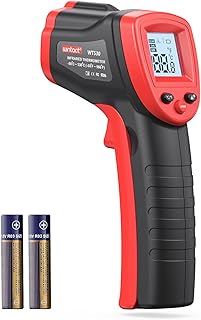
![Eventek Infrared Thermometer Gun, [3 in 1] -58℉~](https://m.media-amazon.com/images/I/71hAElgVV5L._AC_UL320_.jpg)